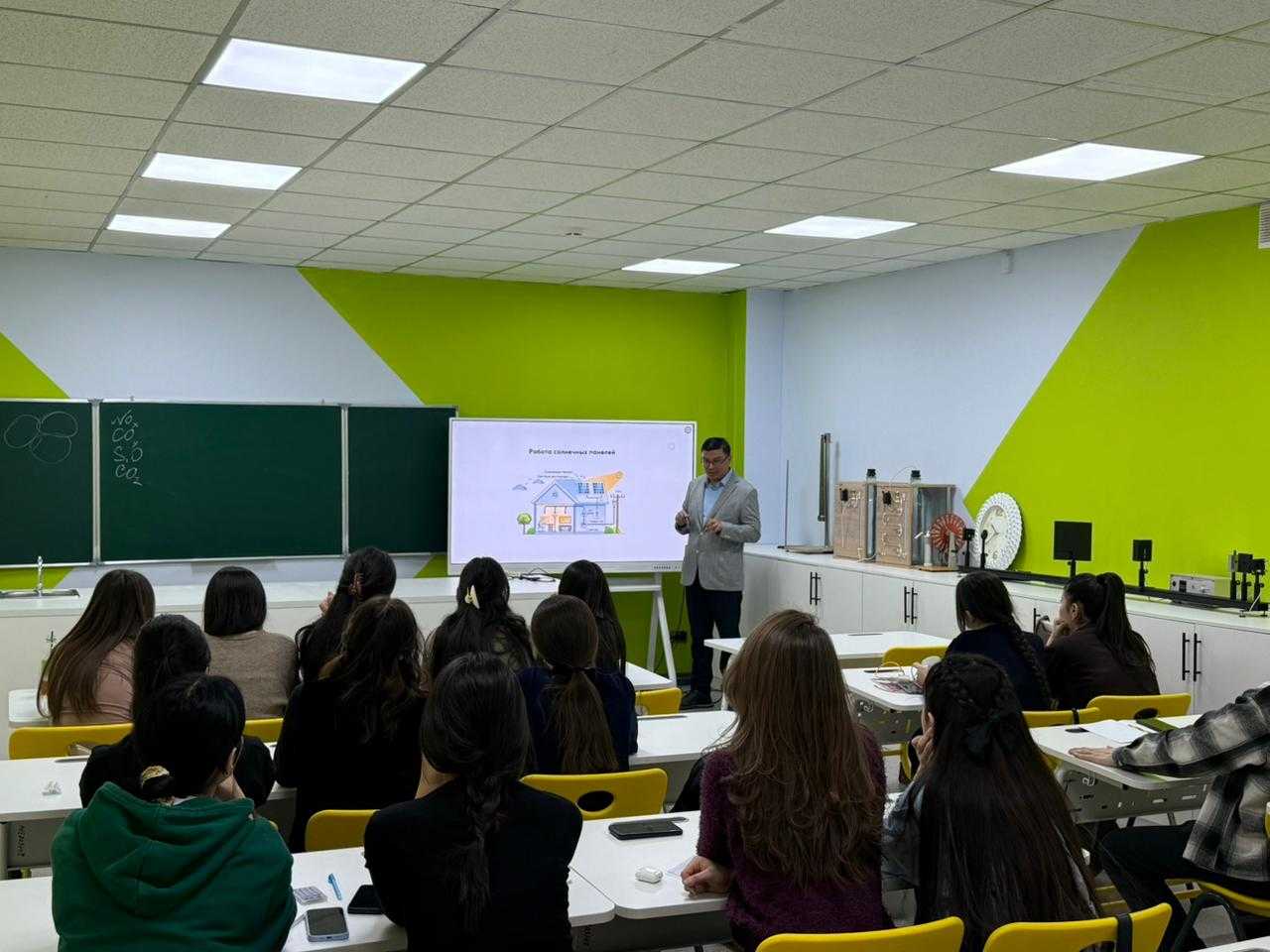
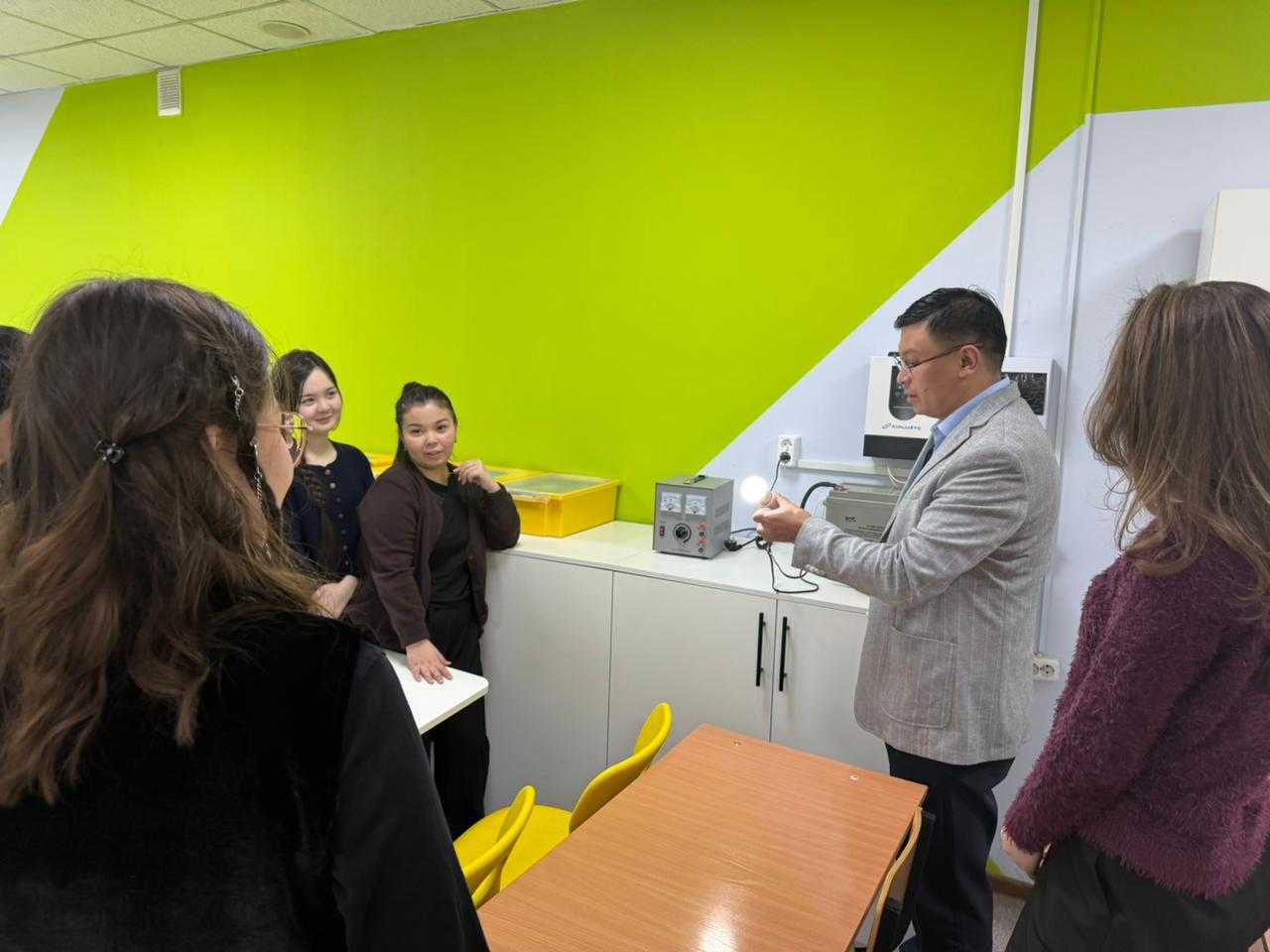
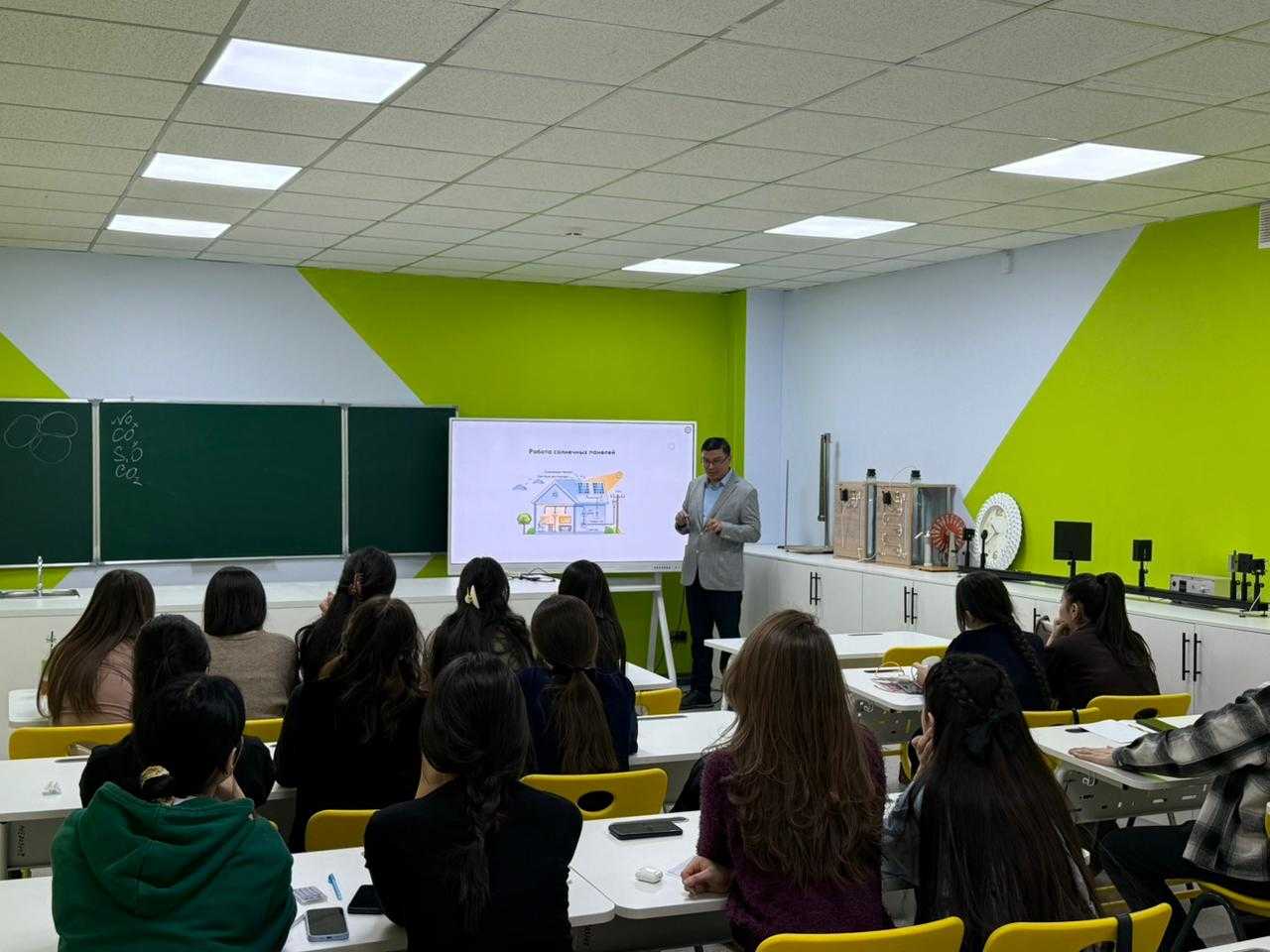
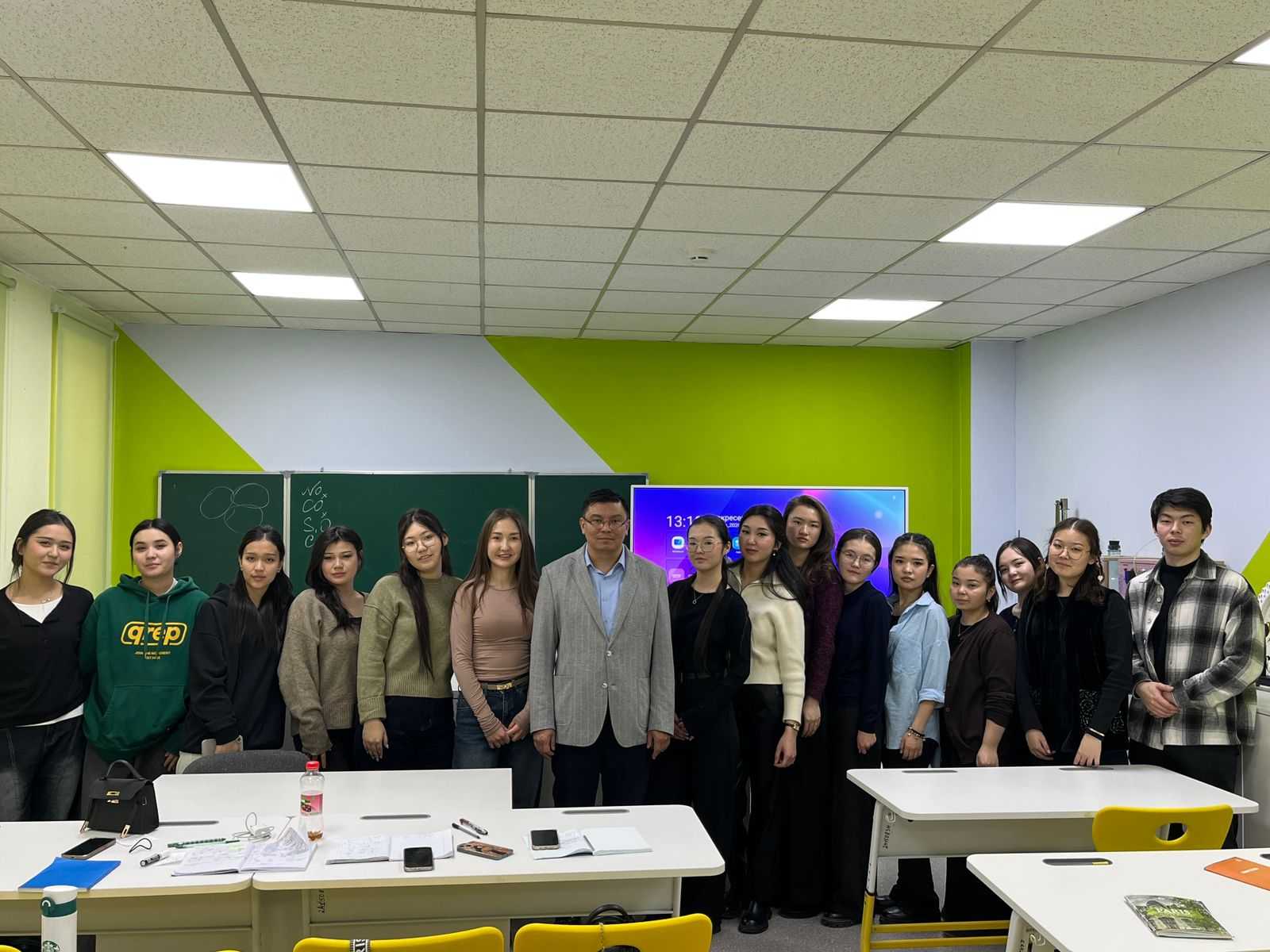
On January 29, 2026, within the framework of integrating
sustainable development principles into the educational process and scientific
research activities, a training and practical seminar was conducted for
students of the 6B01505 “Physics” program, dedicated to analyzing the energy
generated by solar panels.
Earlier, on
January 23, 2026, two solar panels were installed at the university,
providing a practical basis for holding this seminar.
The event aimed to develop modern professional competencies in students in the
fields of renewable energy and efficient use of energy resources.
During the
seminar, students became familiar with the physical principles of converting
solar energy into electricity, the operational principles of photovoltaic
modules, as well as methods for measuring and analyzing electricity production
indicators. Special attention was given to practical work with real data
obtained from the operation of solar panels, which allowed connecting
theoretical knowledge with practical experience and enhancing the applied
training of future specialists.
The
conducted training and practical seminar contributed to the development of
students’ analytical thinking, deepened their knowledge in alternative energy
sources, and fostered a responsible attitude toward environmental safety and
energy conservation. Discussion of current climate change issues and the role
of clean energy broadened students’ horizons and increased their motivation to
participate in research and project activities.
Additionally,
this event made a significant contribution to achieving the United Nations
Sustainable Development Goals (SDGs), in particular:
· SDG 4 “Quality Education” – through the introduction of
practice-oriented teaching methods and use of modern technologies;
· SDG 7 “Affordable and Clean Energy” – promoting and studying renewable
energy sources;
· SDG 13 “Climate Action” – fostering students’ understanding
of the need to reduce negative environmental impact and transition to
sustainable energy consumption models.
The training
and practical seminar was conducted by PhD, Associate Professor Serik
Nurkenov, who provided scientific and methodological support for the event
and actively involved students in discussing current issues in solar energy
development. Conducting such seminars contributes to improving the quality of
future specialists’ training and strengthening the role of the educational
institution in implementing sustainable development initiatives.